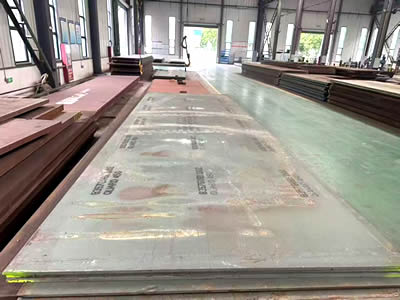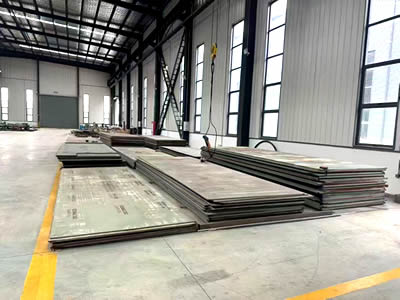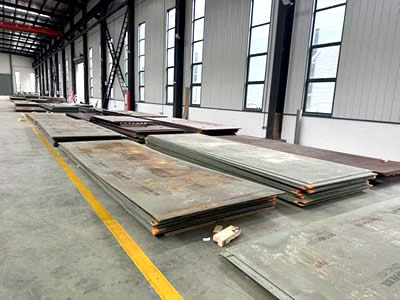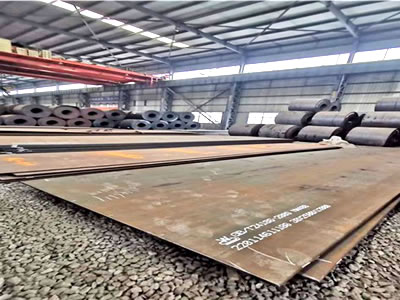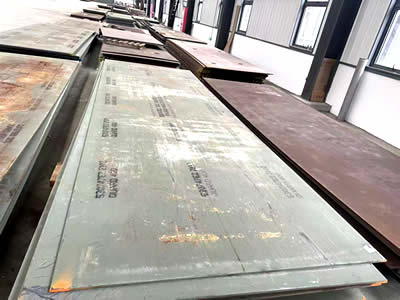
What is wear-resistant composite steel plate
Wear-resistant composite steel plates are specialized products designed for high-wear conditions. They are produced through a metallurgical bonding process, combining low-carbon steel, low-alloy steel, or stainless steel substrates with high-hardness alloy wear-resistant layers. The substrates provide strength and toughness support, while the wear-resistant layers contain alloying components such as chromium, manganese, and molybdenum. The carbide hardness reaches HV1700-2000, and the surface hardness is HRC58-65. The wear resistance is 20-25 times that of low-carbon steel [3-4] [7]. This material combines impact resistance, high temperature resistance (up to 800°C), and corrosion resistance. It supports processing methods such as cutting, welding, and bending, and can be adapted to engineering structures through welding or bolt connections [1-2] [5].
The product is prepared using the build-up welding process, with the wear-resistant layer accounting for 1/3 to 1/2 of the total thickness. The standard specifications cover a wear-resistant layer thickness ranging from 3 to 20mm and a total substrate thickness of 6mm or more [3] [6] [8]. It is primarily used in wear-resistant components such as hoppers, conveyor systems, and fan blades in industries like metallurgy, coal, power, and mining. It demonstrates high cost-effectiveness in high-temperature, impact, and corrosive environments [2]. Its bimetallic composite structure not only ensures the impact absorption capacity of the base material but also extends the service life of the equipment through the hard wear-resistant layer